Skip to content
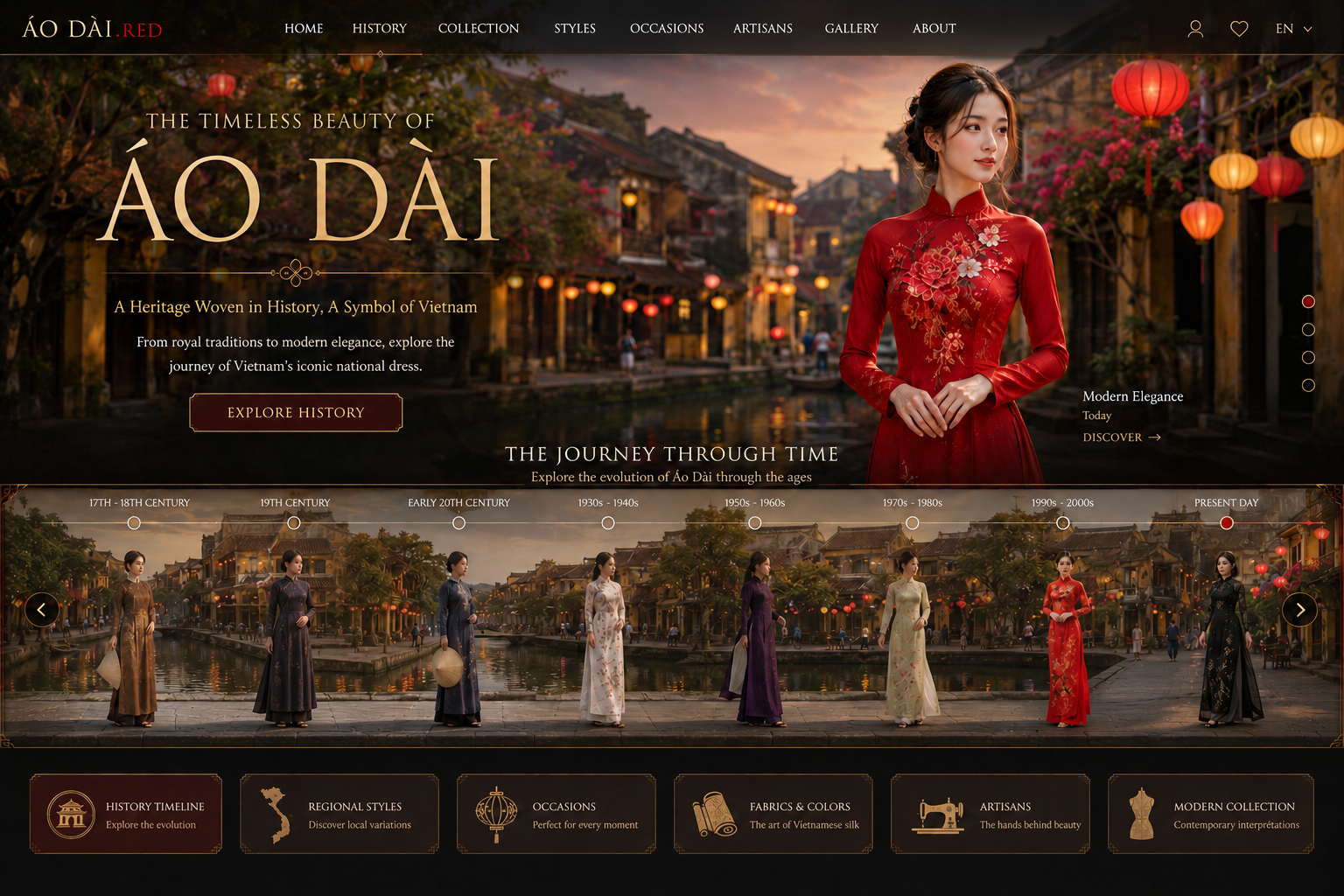
Vietnamese village at sunset with a woman wearing an elegant red Ao Dai

Áo dài (dot) red

Áo Dài

The Timeless Beauty of the Áo Dài

A heritage woven in history, silk, ceremony, and the living imagination of Vietnam.

Explore History

Interactive History

A living timeline, not a costume catalog

1600s

Courtly Origins

Early forms of layered tunics and flowing robes emerge through regional court dress, trade, and local craft.

The Ao Dai's earliest story is not a single invention. It is a slow refinement of Vietnamese ideals: posture, modesty, movement, and grace.

1600s
1700s
Nguyen Dynasty

Interactive Museum

Move through the village

Museum village panorama

Museum Sections

A complete cultural archive

History

The evolution of a national silhouette.

Gallery

A living archive of color, movement, and ceremony.

Collections

Curated interpretations from court to couture.

Wedding Ao Dai

Red silk, gold thread, family blessing.

Student Ao Dai

White fabric, morning light, quiet pride.

Royal Ao Dai

Imperial Hue motifs and formal symbolism.

Modern Fashion

New forms shaped by designers and diaspora.

Silk Library

Material stories from loom to atelier.

Embroidery Museum

Needlework as memory, status, and art.

Color Symbolism

Red, gold, white, black, and jade in context.

Regional Styles

Hanoi restraint, Hue ceremony, Saigon polish.

Museum Shop

Books, prints, and limited cultural objects.

About Vietnam

Landscape, craft, foodways, cities, and spirit.

Interactive Map

Explore regional styles across Vietnam.

Interactive Map

Regional styles across Vietnam

Vietnam / Hanoi

Hanoi

Restrained silhouettes, white student Ao Dai, precise collars, literary elegance.

A northern language of poise shaped by old streets, schools, and formal portraiture.

Regional style
Photos
Designers

Fabric Library

Materials you can almost touch

Silk

Light, luminous, and responsive to movement. Silk remains the Ao Dai's most poetic material.

Vietnamese silk villages shaped domestic craft and ceremonial dress for centuries.

Velvet

Deep pile, low glow, and formal weight for evening and winter ceremonies.

Velvet lends the Ao Dai a theatrical stillness suited to portraiture.

Linen

Breathable and textured, often used for relaxed modern interpretations.

Natural fibers connect the garment to climate, daily life, and restraint.

Cotton

Fresh, practical, and beloved for student Ao Dai and everyday wear.

Cotton carries memory: school gates, bicycles, rain, and morning light.

Lace

Openwork detail adds delicacy to bridal and portrait Ao Dai.

Lace entered modern wardrobes through global exchange and atelier craft.

Organza

Sheer, crisp, and architectural, it creates volume without heaviness.

Contemporary designers use organza to make heritage feel weightless.

Brocade

Raised woven patterns bring ceremony, status, and tactile richness.

Brocade connects royal halls, family occasions, and textile symbolism.

Hand embroidery

Thread becomes lotus, bird, cloud, poem, and blessing.

Embroidery preserves the hand of the maker inside the finished garment.

Light Three.js

A silk thread in motion